 Lymph Plan
Quick answer: A lymphatic drainage tea is a herbal blend, usually dandelion, cleavers, red root, nettle, calendula, echinacea, burdock or ginger, sold with the promise of "flushing" or "draining" your lymph. No herb or tea has been shown in a human trial to move lymph, drain a puffy face or "cleanse" the lymphatic system. What some of them do have is a mild diuretic effect (dandelion leaf, nettle, parsley) or a gut-soothing effect (ginger, peppermint), which can make you look a little less puffy for a few hours; that is water leaving through the kidneys, not lymph through the nodes, and it comes back with your next glass of water. Lymph moves when muscles contract, when you breathe deeply and when skin is gently stretched toward the nodes (1, 2). A warm cup of tea is a pleasant ritual and a fine way to drink water; treat it as that, not as the treatment.
which zones puff up for you? → a 5-minute routine; the tea is optional, the movement is not
What a "lymphatic drainage tea" actually is
Search the phrase and the results are products: loose-leaf "lymphatic cleanse" blends, boxed "lymph detox" tea bags, and dropper-bottle tinctures with the same herbs inside. Read the ingredient panels side by side and the list is short and repetitive. Dandelion (leaf or root), cleavers, red root, nettle, calendula, echinacea, burdock, parsley, ginger, peppermint, sometimes astragalus or red clover, and in the "detox" versions, senna.
These are dietary supplements, not medicines. In the US, "supports lymphatic health" or "promotes drainage" is a structure/function claim the manufacturer wrote for itself; the FDA does not check it before the box goes on sale, which is why every label carries the line "this product is not intended to diagnose, treat, cure or prevent any disease" (3). The claim is legal because it is vague. It is not evidence.
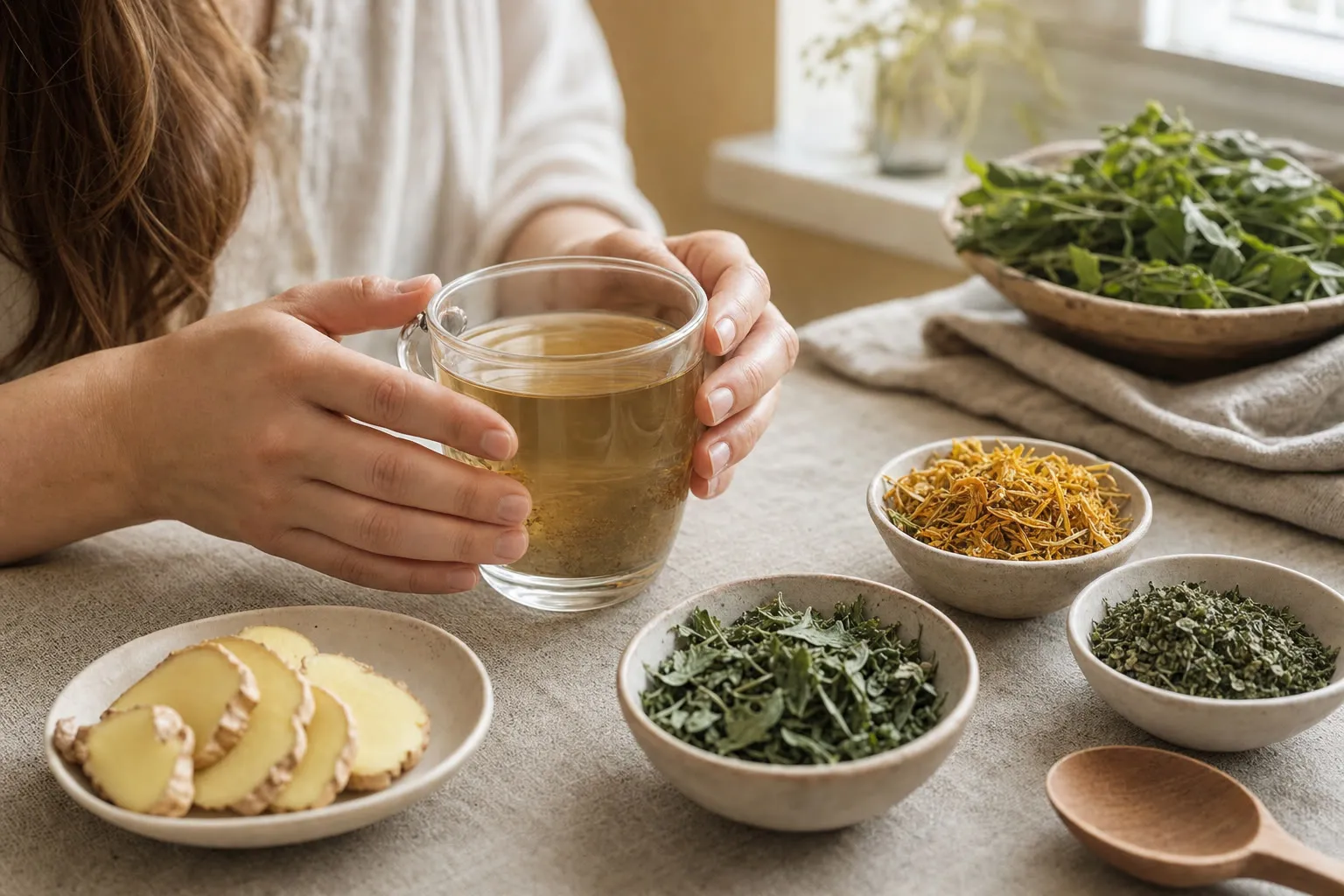
The honest question for any tea is the same one we ask of lymphatic drainage drops and supplements: does it increase muscle contraction, breathing depth or the gentle skin stretch that lymph vessels respond to? None of these herbs does. That leaves one way a tea can make you look less puffy: making you lose water, or calming a gassy stomach. Both are real, both are small, and both are things a glass of water and a walk also do.
Lymphatic drainage herbs, one by one
Here is what each common "lymph herb" is traditionally used for, what human research actually shows, and what you are likely to notice if you drink it.
| Herb | Traditional claim | What human evidence shows | What you may notice | Cautions |
|---|---|---|---|---|
| Dandelion leaf (Taraxacum officinale) | "Flushes lymph", detox | One small human study: more urination over a single day after a leaf extract (4). No lymph or swelling data. | You pee more for a few hours | Ragweed-family allergy; avoid with prescription diuretics or lithium |
| Cleavers (Galium aparine) | The classic Western "lymphatic herb" | No human trials at all. Traditional diuretic use only. | Little or nothing; mild diuretic at most | None documented; still, skip in pregnancy |
| Red root (Ceanothus americanus) | "Moves stagnant lymph", spleen tonic | No human trials. | Nothing measurable | Avoid with blood thinners (traditional astringent; no safety data) |
| Nettle leaf (Urtica dioica) | Diuretic, "cleansing" | Small studies on urination and mineral content; nothing on lymph. | Slightly more urination; a green, savoury tea | Can lower blood sugar slightly; avoid with lithium |
| Calendula | "Lymph-cleansing", skin herb | Studied topically for skin healing; no oral lymph data. | Nothing for puffiness | Ragweed-family allergy |
| Echinacea | Immune "boost", ended up in lymph blends because nodes are immune tissue | Modest evidence for slightly shorter colds (5); nothing on swelling or lymph flow. | Nothing for puffiness | Ragweed-family allergy; autoimmune conditions: ask first |
| Burdock root | Blood and lymph "purifier" | No human trials for swelling or lymph. | Mild diuretic at most; earthy taste | Avoid with diuretics; pregnancy |
| Parsley | Diuretic, de-bloating | Traditional diuretic; small animal data only. | More urination for a few hours | Large medicinal amounts unsafe in pregnancy |
| Ginger | Warming, "circulation", de-bloating | Good evidence for nausea and some for gas and stomach comfort (6); nothing on lymph. | Less gassy, warmer stomach; a flatter feeling belly after a heavy meal | Blood thinners: ask first |
| Peppermint | De-bloating | Evidence for gas and gut spasm comfort; nothing on lymph. | Less trapped gas | Reflux can get worse |
| Senna (in "detox" teas) | "Flush toxins" | A laxative, full stop (7). Nothing to do with lymph. | Cramps and loose stools within hours | Daily use makes the bowel lazy; not for more than a week |
The pattern is consistent. The herbs with any evidence at all are diuretics (dandelion, nettle, parsley) or gut-soothers (ginger, peppermint). The herbs with the strongest "lymphatic" reputation (cleavers, red root, calendula, burdock) have no human trials behind them. "Most powerful herb for lymphatic drainage" has no answer, because there is no herb that has been shown to drain lymph. The one plant extract with swelling evidence, horse chestnut, works on veins in people with diagnosed venous insufficiency (8), not on lymph, and belongs on the swollen ankles page rather than in a tea.
What a lymphatic system tea can and cannot do
What is proven. A warm, unsweetened tea is water, and normal hydration keeps blood volume steady so the kidneys can release fluid; that is the same reason plain water helps. Diuretic herbs shift a few hundred millilitres of water out over a few hours (4). Ginger and peppermint reduce gas and the tight, bloated feeling after a big meal (6). All three make you feel and look a little less puffy for an afternoon.
What is plausible but unproven. A tea ritual in the evening may mean less alcohol, less salty snacking and an earlier night, and each of those reduces morning puffiness on its own. Warmth on the stomach is relaxing and may help the breathing that does move lymph. The herbs themselves are along for the ride.
What is not proven and unlikely. Moving lymph, "unclogging" nodes, draining the face, shrinking a bloated belly through lymph, removing "toxins", boosting immunity in a healthy adult, or losing fat. Lymph does not clog and does not store toxins; it is filtered through around 600 nodes continuously and returned to the blood (2). There is nothing for a tea to flush. The fuller version of that argument, including what the "7-day cleanse" programs actually do, is in lymphatic cleanse: what it really is.
Tea vs water vs a walk: what actually reduces puffiness
| "Lymphatic" tea | Plain water | 20-minute walk | 5-minute self-massage | |
|---|---|---|---|---|
| Moves lymph | No evidence | No (but keeps fluid balanced) | Yes: muscle pump and breathing (1) | Yes: skin stretch toward the nodes (9) |
| Reduces face puffiness | Slightly, for hours, if diuretic | Slightly, over the day | Yes, same day | Yes, within minutes |
| Reduces belly bloat | Ginger/peppermint help with gas | Helps if you were dehydrated | Yes, plus bowel movement | Yes, with clockwise strokes |
| Reduces heavy legs | No | No | Yes | Yes, with elevation |
| Lasts | Hours | Hours | Same day, and cumulative | Hours; baseline improves over weeks |
| Cost | $12–30 a box | Free | Free | Free |
| Downsides | Diuretic/laxative side effects, interactions | None at normal amounts | None for most | Pressing too hard |
The right column is where the evidence lives. Manual lymphatic drainage has been imaged moving fluid toward the nodes (9); walking and calf contraction measurably speed lymph flow (1). If you like tea, drink it before or after the walk. Our step-by-step routines are in lymphatic drainage massage at home and lymphatic walking.
What is the fastest way to cleanse your lymphatic system?
There is nothing to cleanse, so the fastest thing you can do is stop looking for a flush and give lymph the pump it lacks. In order of effect size for everyday puffiness:
- Move. A brisk 20-minute walk, stairs, or ten minutes of exercises that move lymph. Muscle contraction is the main pump.
- Breathe deeply. Ten slow belly breaths; the diaphragm draws lymph up through the chest.
- Stretch the skin toward the nodes. The 5-minute face, stomach or legs routine, feather-light.
- Elevate. Legs up for 15 minutes after a day of sitting.
- Less salt and alcohol, normal water. Around 1.5–2 litres a day including tea and food; extra litres do not push lymph faster.
A tea fits into step 5 as part of your water. It does not replace steps 1–4. If a "lymph cleanse" ever left you feeling lighter, that is mild diuretics, more water, less salt and more walking doing what they always do.
How to drink a lymphatic tea safely, if you want one
There is no harm in a daily cup of dandelion, nettle, ginger or peppermint for a healthy adult, and a warm ritual has its own value. A few rules keep it that way:
- One or two cups a day, not a pot. Diuretic herbs plus heat, exercise or low fluid intake can leave you lightheaded or crampy.
- Read the panel for senna, cascara or "colon cleanse". Those are laxatives, and daily laxative tea is the most common reason "detox tea" hurts.
- Skip stacking. If you take a prescription diuretic, lithium, blood thinners or blood-pressure medication, ask your prescriber before adding diuretic herbs; dandelion, nettle and parsley can add to the effect.
- Ragweed-family allergy (dandelion, calendula, echinacea, chamomile) means hives or an itchy mouth are possible.
- Pregnancy, breastfeeding, kidney, liver or heart conditions, gallbladder disease: skip "drainage" blends unless a clinician who knows the ingredients says otherwise. Ginger and peppermint in food amounts are generally fine; ask about anything else.
- Judge it by the right measure. More bathroom trips is the intended effect. It is not lymph leaving your body.
The same rules apply, in stronger form, to concentrated tinctures; see lymphatic drainage drops and supplements.
Signs of sluggish lymph, and how to tell if it is draining
People buy lymph teas because they feel puffy, heavy or "clogged". The everyday signs, a heavy face in the morning, sock marks that last, a bloated belly, ankles that swell by evening, usually track sleep, salt, alcohol, sitting, heat or your cycle, not a blocked system. They are listed and explained in signs of sluggish lymph and swollen ankles.
How to tell if your lymph is "draining" after a routine is easier than any tea test: a lighter, softer feeling within minutes, sometimes a runny nose after face work or a gurgling belly after stomach work, and less puffiness in the zone you worked the same day. Over weeks, fewer heavy mornings. That is what you should expect from the routine, not from the cup; the full picture is in lymphatic drainage before and after. If a tea box cites a study, check what was measured: almost always urine volume in a small group over one day, and green tea or yerba mate in a blend adds a mild diuretic effect from caffeine itself (10). None of that is lymph flow in a person.
Swelling that is one-sided, painful, warm, sudden, or that pits and stays when you press it, or swelling that started with a new medication, is not a tea question. Those point to veins, heart, kidneys, thyroid or a lymphatic problem and need a clinician.
Safety note
Herbal teas are low-risk for most healthy adults at one or two cups a day, but they are unregulated products with real pharmacology: diuretic herbs interact with diuretic and lithium prescriptions, senna is a laxative, and several "lymph" herbs are ragweed relatives. Anyone pregnant, breastfeeding, on blood thinners, or with kidney, liver, heart or gallbladder conditions should skip drainage blends unless cleared by a clinician. None of this treats or cures any condition. Educational content, not medical advice.
FAQ
What teas drain the lymphatic system?
None has been shown to. Teas with dandelion, nettle or parsley make you urinate more for a few hours, ginger and peppermint reduce gas, and both can make you feel less puffy; that is water and gut comfort, not lymph. Lymph moves with muscle contraction, deep breathing and light skin-stretching strokes toward the nodes.
What is the most powerful herb for lymphatic drainage?
There is no herb with human evidence for lymph flow, so there is no "most powerful" one. Cleavers and red root have the strongest reputation and no trials; dandelion leaf has one small study showing more urination over a day. If you want a cup that does something you can feel, ginger for a gassy stomach or dandelion for a few hours of water loss are the honest picks.
What is the fastest way to cleanse your lymphatic system?
Nothing needs cleansing; lymph filters through the nodes continuously and does not store toxins. The fastest way to feel less puffy is a brisk 20-minute walk, ten slow belly breaths, a 5-minute light self-massage toward the nodes, and less salt and alcohol. A tea can be your water while you do that.
What are signs of a clogged lymphatic system?
"Clogged" is not how lymph works. What people mean is puffiness that lingers: a heavy face in the morning, sock marks, bloating, ankles that swell by evening. Those usually track sleep, salt, alcohol, sitting, heat and your cycle. Swelling that is one-sided, painful, new or pits and stays needs a clinician, not a tea.
What can I drink to unclog my lymphatic system?
Water, at a normal amount (around 1.5–2 litres a day including tea and food). No drink unclogs anything because nothing is clogged. Less alcohol and salt reduces the fluid that pools overnight; that is the drink-related change that actually shows in the mirror.
How to tell if your lymphatic is draining?
After a light routine: a lighter, softer feeling in the zone within minutes, sometimes a runny nose (face) or a gurgling belly (stomach), the urge to pee, and less puffiness the same day. Over weeks, fewer heavy mornings. If you drank a tea and only noticed more bathroom trips, that was the diuretic, not lymph.
Is lymphatic drainage tea safe to drink every day?
For most healthy adults, one or two cups of dandelion, nettle, ginger or peppermint tea a day are fine. Skip daily blends with senna or cascara (laxatives), and skip diuretic herbs altogether if you take prescription diuretics, lithium or blood thinners, are pregnant or breastfeeding, or have kidney, liver, heart or gallbladder conditions.
Does lymphatic drainage tea help you lose weight?
It can drop a pound or so of water for a few hours through urination, and a laxative blend can drop more through the bowel, neither of which is fat and both of which come back. There is no evidence that any lymph tea changes body fat. The ritual can help if it replaces an evening drink or a salty snack.
Sources
- Moore JE, Bertram CD. Lymphatic system flows. Annu Rev Fluid Mech. 2018;50:459–482. (Muscle contraction, respiration and vessel pumping as the drivers of lymph flow.)
- Breslin JW, Yang Y, Scallan JP, Sweat RS, Adderley SP, Murfee WL. Lymphatic vessel network structure and physiology. Compr Physiol. 2018;9(1):207–299. https://pmc.ncbi.nlm.nih.gov/articles/PMC6459625/
- U.S. Food and Drug Administration. Structure/Function Claims (dietary supplement labeling). https://www.fda.gov/food/food-labeling-nutrition/structurefunction-claims
- Clare BA, Conroy RS, Spelman K. The diuretic effect in human subjects of an extract of Taraxacum officinale folium over a single day. J Altern Complement Med. 2009;15(8):929–934. https://pmc.ncbi.nlm.nih.gov/articles/PMC3155102/
- Karsch-Völk M, Barrett B, Kiefer D, Bauer R, Ardjomand-Woelkart K, Linde K. Echinacea for preventing and treating the common cold. Cochrane Database Syst Rev. 2014;(2):CD000530.
- Nikkhah Bodagh M, Maleki I, Hekmatdoost A. Ginger in gastrointestinal disorders: a systematic review of clinical trials. Food Sci Nutr. 2019;7(1):96–108. https://pmc.ncbi.nlm.nih.gov/articles/PMC6341159/
- National Library of Medicine, MedlinePlus. Senna. https://medlineplus.gov/druginfo/natural/652.html
- Pittler MH, Ernst E. Horse chestnut seed extract for chronic venous insufficiency. Cochrane Database Syst Rev. 2012;(11):CD003230.
- Tan IC, Maus EA, Rasmussen JC, et al. Assessment of lymphatic contractile function after manual lymphatic drainage using near-infrared fluorescence imaging. Arch Phys Med Rehabil. 2011;92(5):756–764. https://pmc.ncbi.nlm.nih.gov/articles/PMC3109491/
- Maughan RJ, Griffin J. Caffeine ingestion and fluid balance: a review. J Hum Nutr Diet. 2003;16(6):411–420.
- National Center for Complementary and Integrative Health. Dandelion; Echinacea (herb fact sheets). https://www.nccih.nih.gov/health/dandelion
Lymph Plan team (Virix Labs). Educational content, not medical advice.